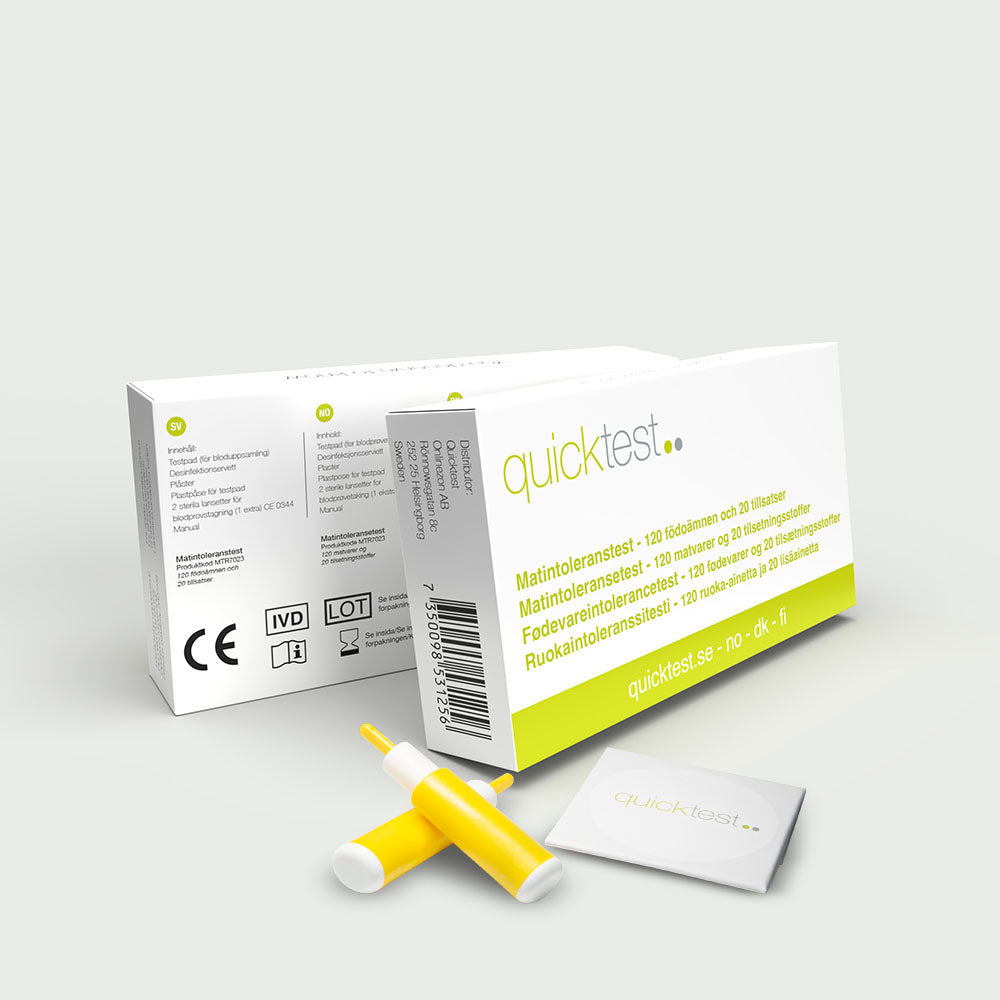
Food intolerance test 140 subjects
140 markers
At-home lab test
Blood You collect the sample at home and send it to a laboratory for analysis.

Food intolerance test 140 subjects

995 DKK 1.395 DKK
  • Görs hemifrån utan läkarbesök
  • Testmetod: Blodprov i finger
  • ISO-certifierat laboratorium
  • Provsvar inom ca 8-12 dagar
  • Detaljerad resultatrapport

Vårt Matintoleranstest analyserar överkänslighet mot 120 födoämnen och 20 tillsatser. Testet gör du själv enkelt och smidigt hemifrån. Ditt prov skickas sedan direkt till vårt laboratorium för analys. Provsvaret får du inom ca 8-12 arbetsdagar.

Quicktest Matintoleranstest är ett bra första steg om du misstänker att du eventuellt kan besväras av matintolerans. Det passar också personer med diffusa symptom såsom olika former av mag- och tarmbesvär, trötthet, huvudvärk eller hudbesvär.

Notera att testet inte kan utföras på barn under 3 år.

Buy more, save more

Payment methods
  • MobilePay
  • Klarna
  • Visa
  • Mastercard
  • Apple Pay
  • Google Pay
In stock and ready to ship

Test at a glance

Collect your sample at home and send it to the laboratory for analysis.

Test type
Lab tests at home
Sample
Blood
Results within
Approx. 8-12 days
  • A kit with everything you need is sent to your home
  • No referral or doctor’s visit needed

Health declaration required

Complete the health declaration before sending the sample or attending the appointment.

Complete the health declaration

Test yourself for food intolerance

Our food intolerance test analyzes for intolerance to 120 common foods as well as 20 common additives, preservatives and dyes. The test also identifies which foods the immune system reacts to and which may be a contributing cause of various symptoms. The analysis is done from a drop of blood that you take from a simple finger prick. The blood sample is sent by prepaid letter directly to our laboratory. Our BMA (Biomedical Analyst) analyzes the sample and looks for specific IgG antibodies for the most common foods and additives. High levels of specific IgG antibodies indicate that you have inflammation caused by food intolerance. When the analysis is complete, a detailed digital test report is sent where you clearly see which intolerances have been detected. You can see an example of what a report might look like here.

Here you will find a list of all the substances that the food intolerance test analyzes.

What is food intolerance?

Food intolerance, or hypersensitivity reaction, to various foods and additives is becoming increasingly common. A food intolerance means that you lack the enzymes needed to break down and absorb certain foods. Common food intolerances are eggs, cow's milk, fish, citrus, shellfish and nuts. The body then has a lower tolerance for the food and every time you consume it, a reaction is created in the body that gives rise to various ailments and health problems and can increase the risk of suffering from other inflammatory diseases. Unlike allergies, the symptoms of food intolerances are often delayed, which means that it can take several hours before any symptoms appear. This often makes it difficult to detect an intolerance and to connect it with something you have eaten.

Symptoms of food intolerance

Many symptoms are diffuse, such as:

  • Stomach problems such as constipation/diarrhea/gas/swollen stomach
  • Headache or migraine
  • Various skin problems such as itching/rash/pimples/eczema/rosacea
  • Fatigue and sleep problems
  • Anxiety, depression, or worry
  • Mood swings
  • Itchy ears, stuffy nose & breathing difficulties
  • High pulse

A person with an undetected food intolerance puts their intestines under strain when they eat the substance that the intestines lack the enzymes to break down. With each exposure, regardless of the amount, the intestinal villi are damaged, which causes the ability to absorb vitamins, minerals and other nutrients may be impairedIt is therefore common that food intolerances also cause deficiency conditions such as: iron deficiency and vitamin d deficiency.

What is analysed

Grains, gluten, legumes and starches

  • Spelt
  • Havre
  • Ris
  • Linser
  • Soja
  • Majs
  • Natriumbenzoat

Meat and poultry

  • Vildsvin

Fish and seafood

  • Torsk
  • Hummer
  • Persille

Fruit and berries

  • Kiwi
  • Banan
  • Mandarin
  • Melon
  • Vandmelon
  • Papaya
  • Ananas
  • Figen
  • Grapefrugt
  • Citron
  • Citronsyre

Vegetables

  • Aubergine
  • Kål
  • Avocado
  • Broccoli
  • Selleri
  • Tomat
  • Oliven
  • Paprika

Nuts and seeds

  • Kastanje
  • Mandel
  • Cashewnød

Herbs and spices

  • Rosmarin
  • Basilikum
  • Kanel
  • Vanilje

Drinks and cocoa

  • Kakao
  • Kaffe
  • Te

Sugar and sweeteners

  • Fruktose
  • Aspartam

Yeast, moulds and additives

  • Lecitin
  • Glutamat
  • Salicylater
  • Polyfosfater
  • Parabener
  • Glycerin
  • Kobolt
  • E 127 - Erythrosin
  • Kaliumsorbat
  • Natriumnitrat
  • E 102 - Tartrazin
  • E155 Brun
  • Sulfitter
  • E 110 - Para-orange
  • Pektin
  • E 120 - Karmin

Other

  • Komælk
  • Gedemælk
  • Fåremælk
  • Æg
  • Laks
  • Tun
  • Blæksprutter
  • Rejer
  • Ansjos
  • Ørred
  • Makrel
  • Muslinger
  • Krebs
  • Kylling
  • Lam
  • Svinekød
  • Oksekød
  • Kalkun
  • Rådyr
  • Hvede
  • Byg
  • Rug
  • Boghvede
  • Bønner
  • Kikærter
  • Grønne bønner
  • Ærter
  • Champignon
  • Kantarel
  • Grøn salat
  • Spinat
  • Kapers
  • Rucola
  • Græskar
  • Agurk
  • Squash
  • Artiskok
  • Rød radise
  • Asparges
  • Kartoffel
  • Gulerod
  • Mynte
  • Løg
  • Hvidløg
  • Nellike
  • Peber
  • Timian
  • Ingefær
  • Laurbærblad
  • Fennikel
  • Salvie
  • Spidskommen
  • Sød merian
  • Muskatnød
  • Cikorie
  • Kokosnød
  • Æble
  • Vindruer
  • Fersken
  • Pære
  • Jordbær
  • Appelsin
  • Hindbær
  • Blåbær
  • Brombær
  • Ribs
  • Kirsebær
  • Blomme
  • Abrikos
  • Hasselnød
  • Pistacie
  • Jordnød
  • Valnød
  • Gær
  • Bagepulver
  • Roesukker
  • Sakkarin
  • Rørsukker
  • Honning
  • Ahornsirup
  • Ascorbinsyre
  • Hydrogeneret fedt

What is analysed

140

Grains, gluten, legumes and starches (7)

  • Spelt
  • Havre
  • Ris
  • Linser
  • Soja
  • Majs
  • Natriumbenzoat

Meat and poultry (1)

  • Vildsvin

Fish and seafood (3)

  • Torsk
  • Hummer
  • Persille

Fruit and berries (11)

  • Kiwi
  • Banan
  • Mandarin
  • Melon
  • Vandmelon
  • Papaya
  • Ananas
  • Figen
  • Grapefrugt
  • Citron
  • Citronsyre

Vegetables (8)

  • Aubergine
  • Kål
  • Avocado
  • Broccoli
  • Selleri
  • Tomat
  • Oliven
  • Paprika

Nuts and seeds (3)

  • Kastanje
  • Mandel
  • Cashewnød

Herbs and spices (4)

  • Rosmarin
  • Basilikum
  • Kanel
  • Vanilje

Drinks and cocoa (3)

  • Kakao
  • Kaffe
  • Te

Sugar and sweeteners (2)

  • Fruktose
  • Aspartam

Yeast, moulds and additives (16)

  • Lecitin
  • Glutamat
  • Salicylater
  • Polyfosfater
  • Parabener
  • Glycerin
  • Kobolt
  • E 127 - Erythrosin
  • Kaliumsorbat
  • Natriumnitrat
  • E 102 - Tartrazin
  • E155 Brun
  • Sulfitter
  • E 110 - Para-orange
  • Pektin
  • E 120 - Karmin

Other (82)

  • Komælk
  • Gedemælk
  • Fåremælk
  • Æg
  • Laks
  • Tun
  • Blæksprutter
  • Rejer
  • Ansjos
  • Ørred
  • Makrel
  • Muslinger
  • Krebs
  • Kylling
  • Lam
  • Svinekød
  • Oksekød
  • Kalkun
  • Rådyr
  • Hvede
  • Byg
  • Rug
  • Boghvede
  • Bønner
  • Kikærter
  • Grønne bønner
  • Ærter
  • Champignon
  • Kantarel
  • Grøn salat
  • Spinat
  • Kapers
  • Rucola
  • Græskar
  • Agurk
  • Squash
  • Artiskok
  • Rød radise
  • Asparges
  • Kartoffel
  • Gulerod
  • Mynte
  • Løg
  • Hvidløg
  • Nellike
  • Peber
  • Timian
  • Ingefær
  • Laurbærblad
  • Fennikel
  • Salvie
  • Spidskommen
  • Sød merian
  • Muskatnød
  • Cikorie
  • Kokosnød
  • Æble
  • Vindruer
  • Fersken
  • Pære
  • Jordbær
  • Appelsin
  • Hindbær
  • Blåbær
  • Brombær
  • Ribs
  • Kirsebær
  • Blomme
  • Abrikos
  • Hasselnød
  • Pistacie
  • Jordnød
  • Valnød
  • Gær
  • Bagepulver
  • Roesukker
  • Sakkarin
  • Rørsukker
  • Honning
  • Ahornsirup
  • Ascorbinsyre
  • Hydrogeneret fedt

How it works

  1. 01

    Receive your test

    The kit, instructions and materials are sent to your home in discreet packaging.

  2. 02

    Collect a blood sample

    Warm your hands, use the lancet and produce a few drops of blood from your fingertip.

    Fill the marked circles on the card and let it dry according to the instructions.

  3. 03

    Send it back

    Seal the sample in the return packaging and send it to the laboratory as instructed.

  4. 04

    Receive your report

    When the analysis is complete, you receive a digital report that clearly explains your results.

From sample collection to a clear result – every step is designed to be simple.
Fredrik Lönnqvist

The doctor’s view

If you experience recurring problems such as an upset stomach, headache, skin rash or nasal congestion, it could be due to intolerance to one or more specific foods. Additives that are often found in our food can also cause problems.
Some people have symptoms that may be linked to food intolerance without knowing it. With a food intolerance test, you can get clear indications of which foods you should be cautious with.
Licensed Physician
Fredrik Lönnqvist

Fredrik Lönnqvist
Licensed physician

Careful laboratory analysis – from sample collection to result.

Every step is designed to make it easy to collect your sample at home, send it for analysis and receive a clear digital result.

  • Laboratory analysis

    Your sample is sent to an external laboratory and analysed using the method stated for the test.

  • Secure handling of your information

    Personal and health information is used only to manage your order, the analysis and your result.

  • Clear instructions at every step

    You receive guidance for sample collection, labelling and return so the sample can be handled correctly.

  • Digital test result

    When the analysis is complete, you receive access to a digital report with your results.

Frequently asked questions

What is tested?
  • 120 commonly consumed foods such as grains, dairy products, coffee, tea, eggs, vegetables, fruit and animal products. Simply put, the most common foods we consume in Sweden.
  • 20 additives such as preservatives and colorants.
NOTE! Our Food Intolerance Test does not analyze intolerance to lactose, fructose, sorbitol, histamine or gluten. Since these intolerances are not based on IgE or IgG4 antibodies, they can only be analyzed using other tests.
What is the difference between food intolerance and allergy?
Food intolerance is caused by an abnormal sensitivity to a food and should not be confused with an allergic reaction. In an allergy, the body produces IgE antibodies that activate substances that release histamines. These usually create an immediate and often strong reaction after ingestion of or exposure to the substance. In food intolerance or a hypersensitivity reaction, the body also produces antibodies, but so-called IgG antibodies, which differ from those produced in an allergic reaction because they do not involve antibodies in the immune system.
Can you recover from a food intolerance?
By excluding the foods you are intolerant to, the inflammatory process can be reduced and may even disappear completely. This allows the body to recover, and the foods can then be reintroduced very gradually.
How is the test result presented?
When the analysis is complete, a detailed digital test report is sent to you, clearly showing any intolerances that have been detected. The test result also includes recommendations on what you should avoid. The test result is based on the degree of intolerance across three different levels, so you receive elimination and reintroduction recommendations based on how intolerant you are.
Can children take the test?
Yes, the test can be performed on children over 3 years of age.
Do you need to have eaten the food you may be intolerant to for the test to react?
No, it can also show whether you are intolerant to a food you have never eaten because your metabolism has a natural predisposition to intolerance (small variations in the DNA of the genes most involved in food metabolism).
If I have not eaten a food for several years, can the test still show that I am intolerant to it?
Yes, if you have a genetic predisposition to intolerance.
How does the test work? What indicates an intolerance?
Our laboratory reads blood samples using the ELISA method, which is in fact a Swedish invention from Stockholm University. It checks for specific antibodies (IgM) against proteins in each food in the analyzed sample. If the result is positive, the reaction that occurs is quantified by an instrument (low, medium or high level).
How reliable is the test?
The ELISA method is internationally established and has been approved by institutes throughout the diagnostic field. In other words, reliability is high.
Where are the tests analyzed?
All tests are analyzed in our laboratory by specialized biomedical scientists and physicians. Once the blood sample has been received by our laboratory, you will receive your results within approximately 8-12 business days.
How is it done?
Using the included lancet, prick a finger of your choice and place a drop of blood on a special test pad. Place the test pad in the prepaid envelope. Our laboratory analyzes your blood and, once everything is complete, you receive an email. Log in with BankID to read your results safely and securely.
How long does it take to receive the results?
The normal turnaround time for laboratory tests is 8-12 business days. After public holidays and during vacation periods, processing times may be slightly longer.
How do I receive my analysis result?
Once your test has been analyzed, you will receive an email from our partner IDkollen. The email contains a link where you can log in and retrieve your report. Login is secure using BankID.
Portrait

Home testing made simple

Quicktest brings together self-tests and home sampling tests in one place. Clear instructions, discreet delivery and easy-to-understand results help you take the next step with confidence.

Portrait
100.000+
Customers and users
Quality
Carefully selected tests
Europe
Delivery across Europe
Support
Help choosing the right test
Food intolerance test 140 subjects